
Arrow Sudoku
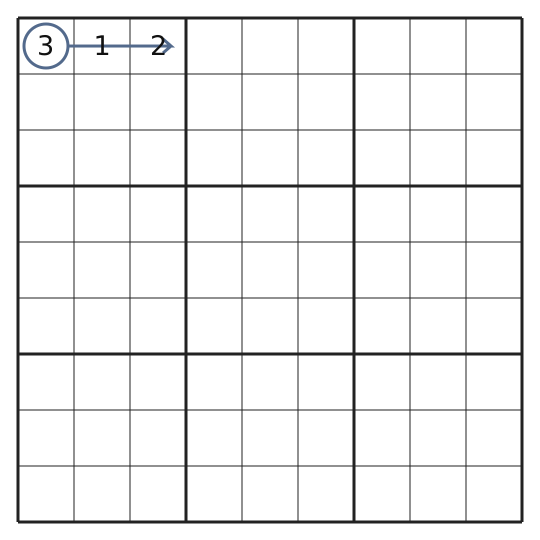
The digits on an arrow add up to the digit in its circle.
Rules
Follow the standard Sudoku rules. For an ordinary single-cell circle, its digit equals the sum of the cells along its arrow. The circle is not included in that sum. Arrow digits may repeat only if all other rules allow it; read the puzzle's instructions for multi-cell circles or special arrows.
A visual example
How to start
Count the arrow cells and consider their possible totals. A two-cell arrow in one row has a minimum total of 3 because its digits must be distinct. A three-cell arrow entirely in one unit has minimum 6. Use other units to decide the order of the digits.
A mistake to avoid
Do not import Killer Sudoku's cage-wide no-repeat rule into every arrow. Two arrow cells that share no standard unit can repeat unless the puzzle adds another restriction.
Keep learning
Review the standard rules and worked solving techniques. Our daily game and printable packs use standard Sudoku rules; they do not play this variant.