
Diagonal Sudoku (X-Sudoku)
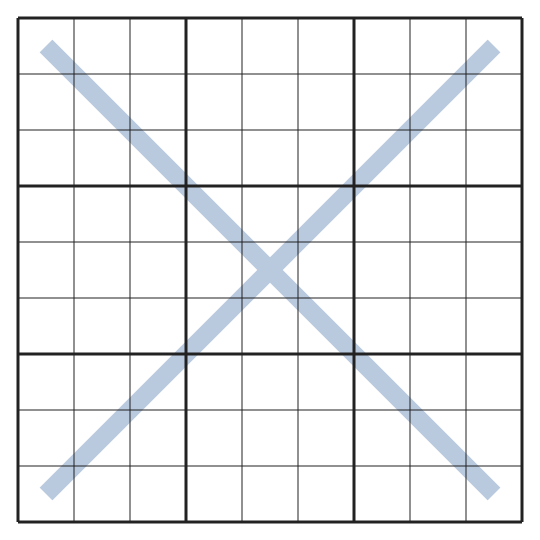
Add two more no-repeat units across the main diagonals.
Rules
Each row, column and 3 by 3 box contains 1 through 9 once. In the usual X-Sudoku form, each of the two marked main diagonals must also contain 1 through 9 once. Follow the markings: ordinary Sudoku does not impose diagonal rules.
A visual example
How to start
Treat each marked diagonal as another nine-cell unit. Track its missing digits and look for hidden singles or pairs. If eight cells on a diagonal contain 1 through 8, the ninth is 9; still check the rest of the grid for earlier mistakes.
A mistake to avoid
Only the specified diagonals are extra units. Short parallel diagonal lines do not gain a no-repeat rule merely because the puzzle is called diagonal Sudoku.
Keep learning
Review the standard rules and worked solving techniques. Our daily game and printable packs use standard Sudoku rules; they do not play this variant.